
Having reached the end of this journey through Spain’s innards, you might think we are a country in perpetual chaos. We have examined education, health care, justice, the economy, culture, infrastructure, the environment, science and technology, and social policy. And in every subject, there always seems to be a touch of disorder, a pinch of improvisation, and, of course, a generous dose of humor—because if we do not laugh, we will cry. But before you think all is lost, let me tell you something: it is not. If anything characterizes Spain, it is that, against all odds, we survive! And we do it in style, even if the style sometimes amounts to a bit of a bodge.
That is how the world sees us, and how we see ourselves too. And it is not just me, this book’s author, saying so. My faithful companion on this adventure, ChatGPT 4, also has access to all that global knowledge accumulating online, and believe me, opinions about Spain do not vary much. Sometimes we are seen as the land of siestas, bullfighting, and tourist-packed beaches; at other times, as a country that has managed to get back on its feet again and again despite its many failings.
But it is not all sarcasm and self-criticism. There is light at the end of the tunnel, and although we stumble toward it, we always end up finding the way. So, looking to the future with a mixture of humor and hope, let us close this book by reflecting on who we are, how the world sees us, and, most importantly, where we are heading.
Spain: The Country Where Anything Is Possible—Even If It Takes Longer Than Planned
The world sees us with a mixture of fascination and bewilderment. For many, Spain is that country where, for some magical reason, everything seems to work at the last moment. Construction gets finished—although late—bureaucratic procedures get resolved—eventually—and the economy keeps going despite recurring crises. It is as though we had a special gift for making things work precisely when nobody expects it anymore.

Original AI-generated illustration; an artistic interpretation, not a documentary photograph.
To foreign eyes, we are the country where “we’ll see about tomorrow” is practically a philosophy of life. And although that may sound like a joke, there is some truth in it. Improvisation is in our DNA, and when there is a problem, we always find a solution… even if that solution involves a chain of favors among neighbors or the famous “shortcut” nobody understands but which works.
The most curious thing is that, although this may look chaotic from outside, many admire our ability to keep going, no matter how many bumps lie ahead. Because, after all, in a world where everything is planned down to the millimeter, there is something refreshing about the idea that sometimes simply improvising is the best way forward.
Siestas and Paella: The Stereotype That Never Goes Away—Though We Do Not Mind Much
We cannot discuss how the world sees us without mentioning the clichés following us wherever we go: siestas, paella, and, of course, flamenco. Looking at travel guides, you would think Spain amounted to an endless after-lunch conversation in the sun, a paella on the table and a couple of guitars playing in the background. And hey, I will not lie: that sounds pretty good. But we all know reality is much more complicated—although, admittedly, we will never turn down a good paella.
Those clichés, though simplistic, have some basis in reality, but are only a small part of who we really are. Spain is much more than that. We are the country that created the AVE, one of the world’s fastest trains—even if some stretches still have empty stations; we are a renewable-energy powerhouse; and in scientific research, we have given the world Nobel laureates and medical advances that have changed lives.
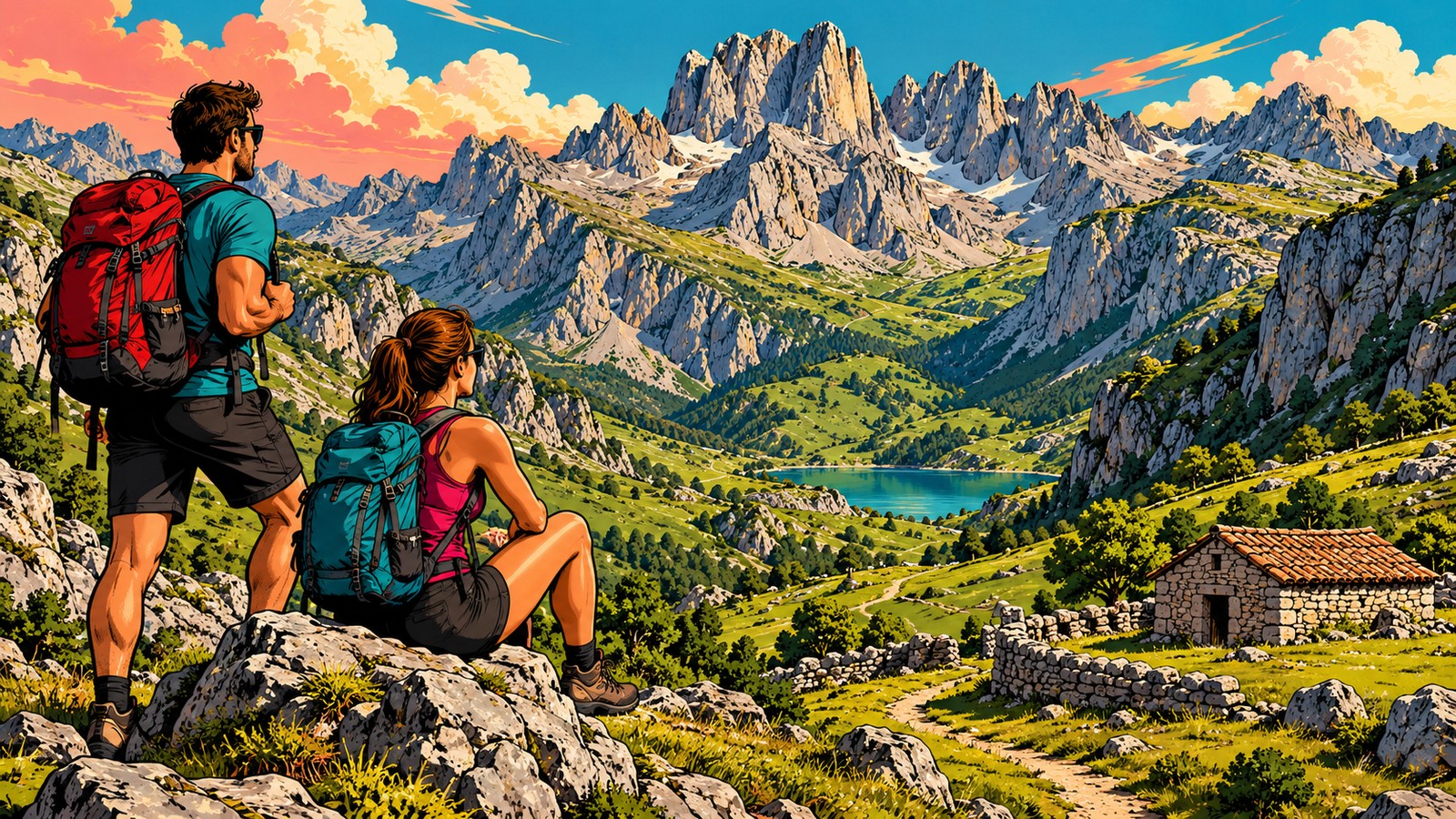
Original AI-generated illustration; an artistic interpretation, not a documentary photograph.
Nevertheless, we seem stuck in that collective imagination portraying us as the country of the eternal siesta. Does it bother us? Not really. In a way, we have embraced it, because at the end of the day, if we know one thing, it is that a good siesta never hurt anyone. And if the rest of the world wants to think we live from one party to the next, let them. Meanwhile, we will keep doing what we do best: working hard—even if it does not look that way.
Eternal Infrastructure: The Country Where Construction Never Ends—but Eventually Works
We have said it before: if anything defines Spain, it is our endless love of construction. From building highways to renovating village squares, something is always being improved—or at least being worked on. And how does the world see us in this respect? Well, to be honest, with a mixture of envy and despair.
Envy, because when we finally finish something, we do it well. Our airports are modern, our highways rank among Europe’s best, and our railway stations, although sometimes empty, have stunning architectural beauty. But, of course, all this comes after a seemingly endless wait.
The rest of the world cannot understand how, in the twenty-first century, a European country such as Spain still has projects dragging on for decades. But for us, it is already part of the routine. We know that eventually everything will work, and meanwhile we learn to live with cranes, diversions, and road closures. Because if life in Spain has taught us anything, it is that patience, although exasperating, always pays off.
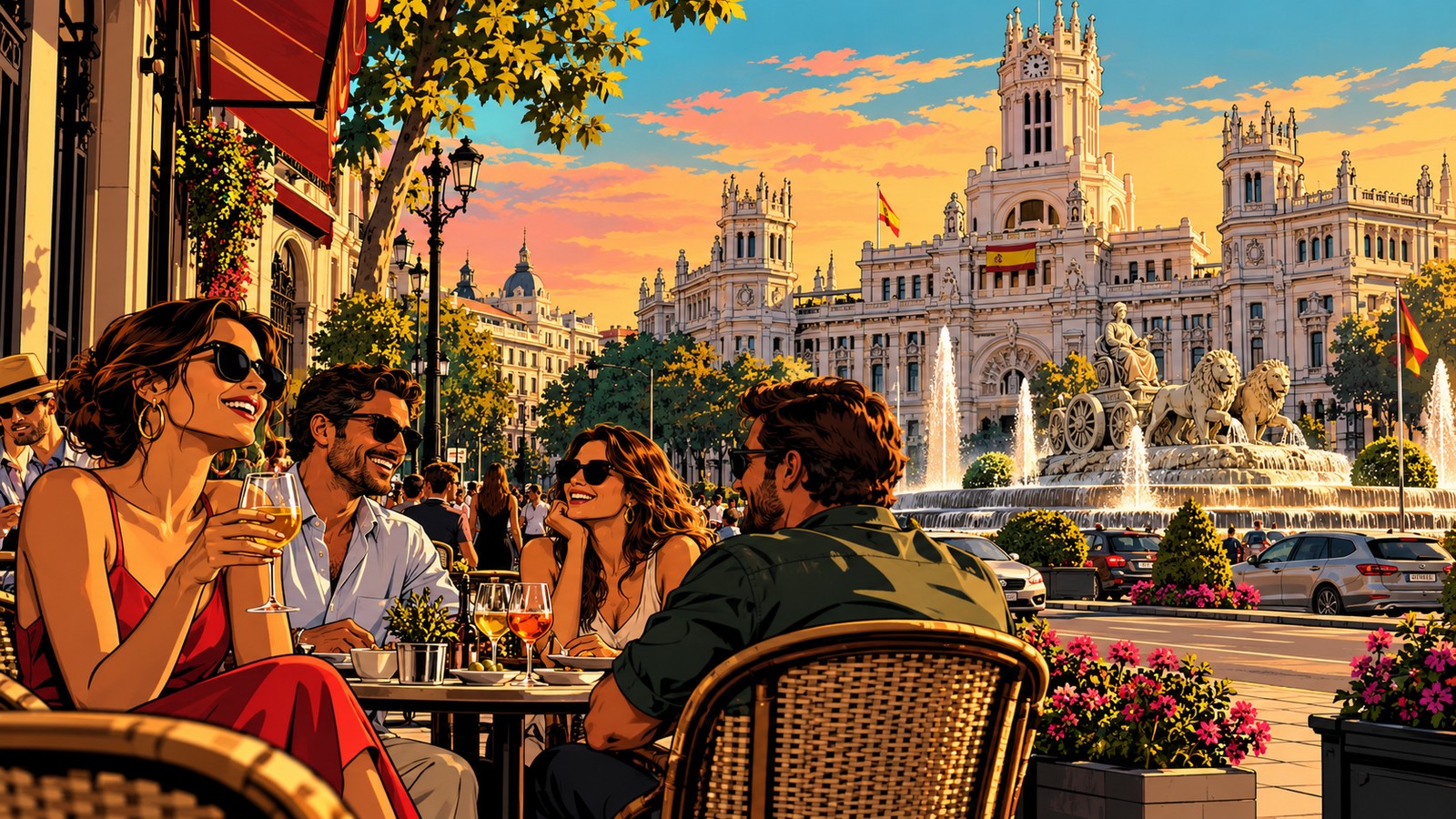
Original AI-generated illustration; an artistic interpretation, not a documentary photograph.
Comparing the Nordic Countries: “How Do They Do It? And Why Can’t We?”
Ah, the Nordic countries. Those paradises of efficiency where everything seems to work perfectly. Sweden, Norway, Denmark, and Finland are the classic examples we always bring out when we want to complain about our own inefficiency. “Look how the Swedes do it,” we say, while battling the appointment system to renew our national identity cards.
And we will not deny it: the Nordics are ahead of us in almost everything. They have welfare systems that genuinely work, social benefits arriving on time, infrastructure maintained impeccably, and a bureaucracy that, to our surprise, is fast and efficient. It is as though they lived in a parallel universe where everything is organized in advance and delays do not exist. But, of course, they also have long, cold, dark winters. There had to be something wrong with them!
Now then, why can we not do the same here? Why do we keep battling a bureaucracy seemingly designed to make our lives impossible? The answer probably has to do with our culture, our history, and, above all, our character. In Spain, we are more inclined to “grab the moment and get it done.” We do not like planning too much, and although that causes plenty of headaches, it also gives us a flexibility that simply does not exist in other, better-organized countries.
The Nordics, with their coolness and perfection, are the ideal counterpoint to us Mediterraneans, who prefer controlled chaos. Because yes, we do complain about our own systems, but ultimately we always find a way through. And if that means improvising as we go, so be it. As a good Spaniard would say: “Not trying would be worse.”

Original AI-generated illustration; an artistic interpretation, not a documentary photograph.
And Now What? Spain’s Future—with a Touch of Hope
After exploring every corner of our country, from social policies to endless construction, one question remains in the air: what now? Will we remain that country that always seems halfway there, or will we take the decisive step toward a Spain that is more efficient, modern, and—why not—a little more Nordic?
The answer, as always, is in our hands. Spain has enormous potential, and although we sometimes seem trapped in a spiral of improvisation, we have also shown that when we put our minds to it, we are capable of great things. From science and technology to tourism and culture, we have plenty to offer the world. And, most importantly, we have the ability to change.
Perhaps we will not become Sweden overnight—and frankly, we do not need to—but we can learn from our mistakes and improve. We can make our social policies fairer, our infrastructure work on time, and our bureaucracy less Kafkaesque. Because if anything characterizes us besides the ability to laugh at ourselves, it is our resilience.
Spain is a country of contrasts. We are a country where things take longer than expected, bureaucracy seems designed to complicate life, and construction never ends. But we are also a country full of life, creativity, and, above all, hope. Because although we complain—and we do it a lot—we also know things can get better.

Original AI-generated illustration; an artistic interpretation, not a documentary photograph.
The world sees us as a vibrant place, sometimes chaotic but always fascinating. And although we are not perfect, we have something many other countries envy: the ability to adapt, improvise, and keep going, whatever happens. So yes, we are a little disorganized, but we are also a country that never gives up.
And now that we have reached the end of this book, there is only one thing left to say: Spain is different, yes. But that is not a bad thing. It is what makes us unique. And who knows, perhaps in the future, as we keep improving at our own pace, the world will begin to see us not just as the country of siestas and endless construction but as a place where anything is possible. Although, of course, in our own way.