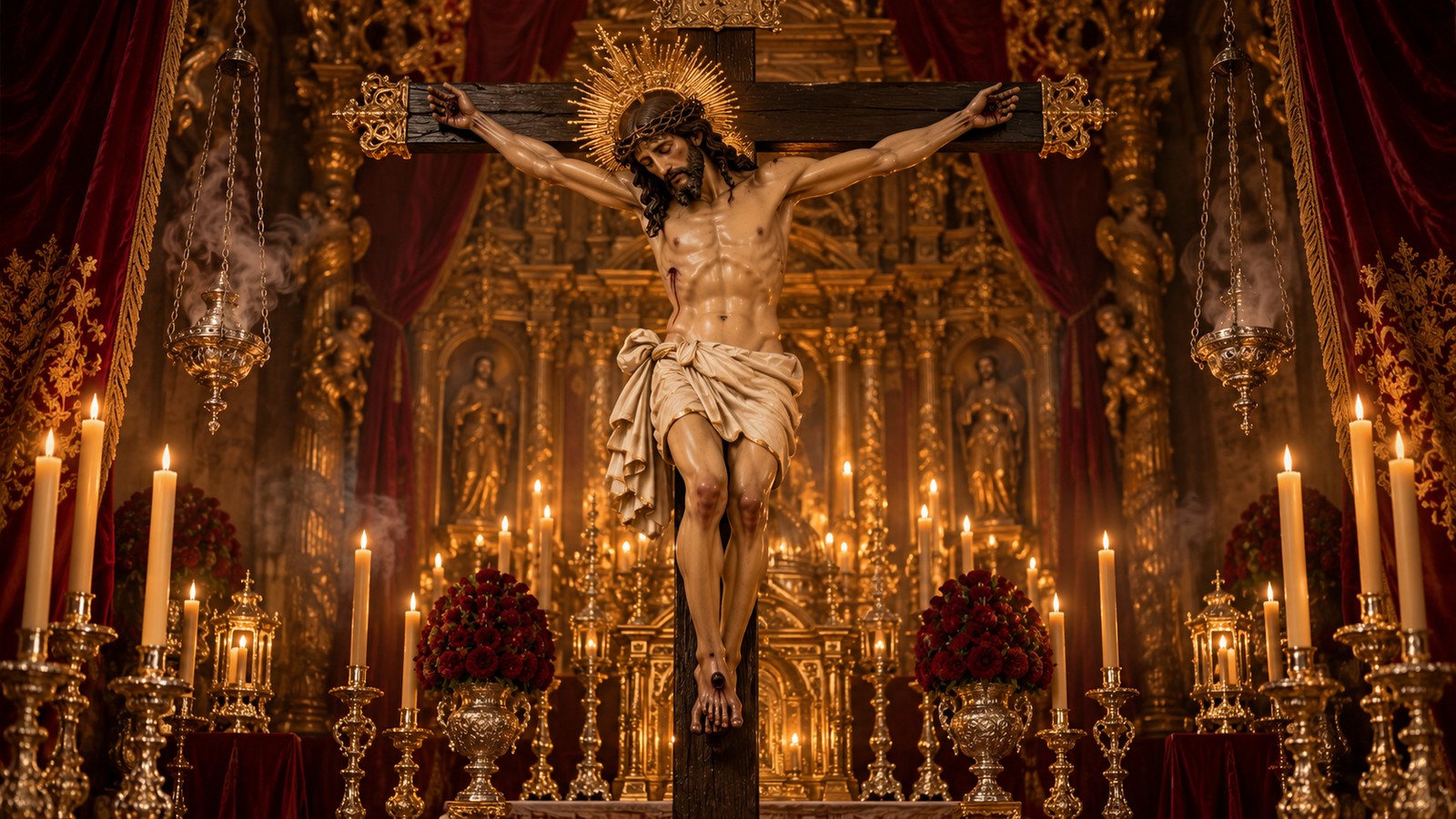
The Church's first three centuries were characterized by rapid growth, but also by hostility and persecution. Following the crucifixion and resurrection of Jesus, his followers continued preaching the message of salvation, often challenging the religious and political authorities of their time. The Christian community distinguished itself from other religions through its firm adherence to one God, its rejection of idolatry, and its strong sense of fraternity and mutual support.
The early Christians faced sporadic, localized persecutions, such as Nero's in AD 64, when he accused Christians of causing the Great Fire of Rome. This persecution was so brutal that, according to the historian Tacitus, many were crucified, burned alive, or thrown to wild beasts in Nero's Circus. Among the most notable victims were the apostles Peter and Paul, who were martyred in Rome.
The situation worsened under the emperors Domitian and Diocletian. During Diocletian's Great Persecution (AD 303–311), edicts were issued ordering the destruction of churches, the burning of the Scriptures, and the execution of Christian leaders. Thousands of the faithful were martyred, but rather than dying out, the Church grew stronger. Martyrs such as Saint Sebastian, Saint Agnes, and Saint Lawrence became heroes of the faith, inspiring others to persevere amid suffering.
The catacombs of Rome, a vast network of underground tunnels, were used both as cemeteries and as secret places of worship. Here Christians gathered to celebrate the Eucharist, honor the martyrs, and keep the faith alive amid persecution. These sacred places became symbols of resistance and hope, and early Christian art emerged within them, with images of Christ as the Good Shepherd, the fish, and the dove, symbolic representations of redemption and peace.
The last great persecutor, Emperor Diocletian, did not foresee that his attempt to eradicate the Christian faith would soon be followed by Constantine's conversion and the legalization of Christianity. In AD 312, on the eve of the Battle of the Milvian Bridge, Constantine had a vision: he saw a cross in the sky and the words 'In hoc signo vinces' ('In this sign you will conquer'). Attributing his victory to Christ, Constantine issued the Edict of Milan in AD 313, ending the persecutions and granting Christians freedom of worship.