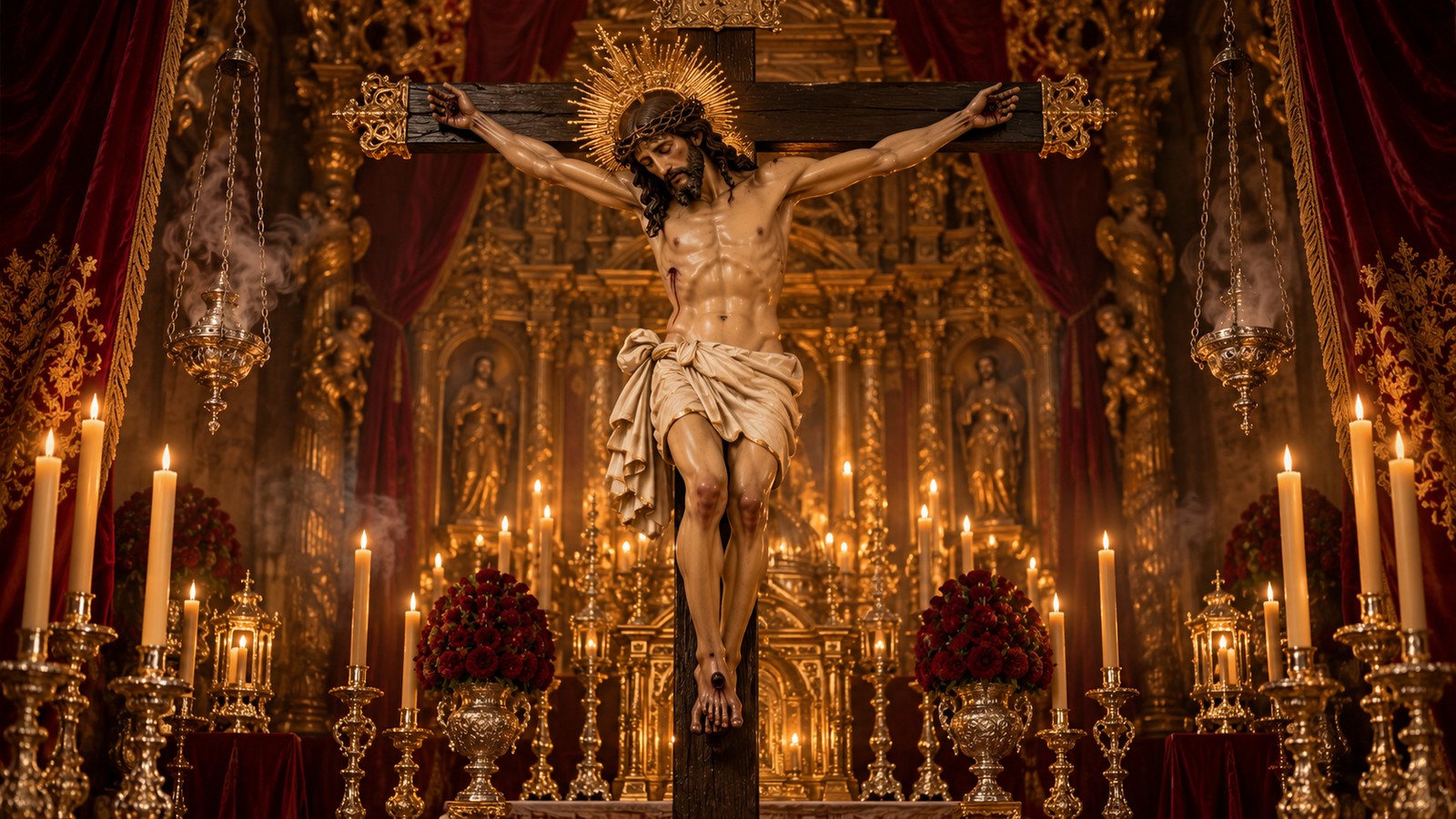
The origins of the Catholic Church go back to the ministry of Jesus Christ, who preached the message of the Kingdom of God and called the first disciples to follow him. First-century Israel was a setting of intense messianic expectations, in which various movements and sects awaited the arrival of a savior who would free the people from Roman oppression. In this environment, Jesus stood out for his radical message of love, forgiveness, and justice. His approach, however, was not merely political, but profoundly spiritual. Jesus proclaimed a Kingdom that was not of this world, based on the transformation of the human heart and the fulfillment of the ancient biblical promises.
Peter, originally Simon, was a fisherman from Galilee who received a special call from Jesus: 'You are Peter, and on this rock I will build my Church' (Matthew 16:18). This moment was crucial, for it symbolized the transfer of authority to a human leader who would act as Christ's visible representative. This 'Primacy of Peter' is the theological foundation of the Papacy's position within the Catholic Church. After Christ's resurrection, Peter assumed his role as guide of the community in Jerusalem, while other apostles set out to preach in different regions.
The figure of Saint Paul, however, was equally significant. Born Saul of Tarsus, Paul was initially a persecutor of Christians until he experienced a radical conversion on the road to Damascus (Acts 9:3–6). After this encounter with the risen Christ, Paul became the faith's most passionate defender, traveling throughout the Roman Empire and founding numerous Christian communities. His Letters, which make up a large part of the New Testament, are the foundation of much of Christian theology.
The relationship between Peter and Paul was not without tensions. In his Letter to the Galatians, Paul describes a moment when he had to confront Peter in Antioch over his attitude toward the Gentiles (Galatians 2:11–14). This early conflict reflected the internal tensions of the nascent Church: should Gentiles follow the Mosaic law? The solution came at the first Council of Jerusalem (Acts 15), where the apostles agreed that faith in Christ, rather than observance of the Law, was the essential criterion for belonging to the new community.
This collaboration and debate between Peter and Paul established a pattern for the Church: a community based on unity in diversity, where different charisms and visions are integrated into a single body under the guidance of the Holy Spirit.