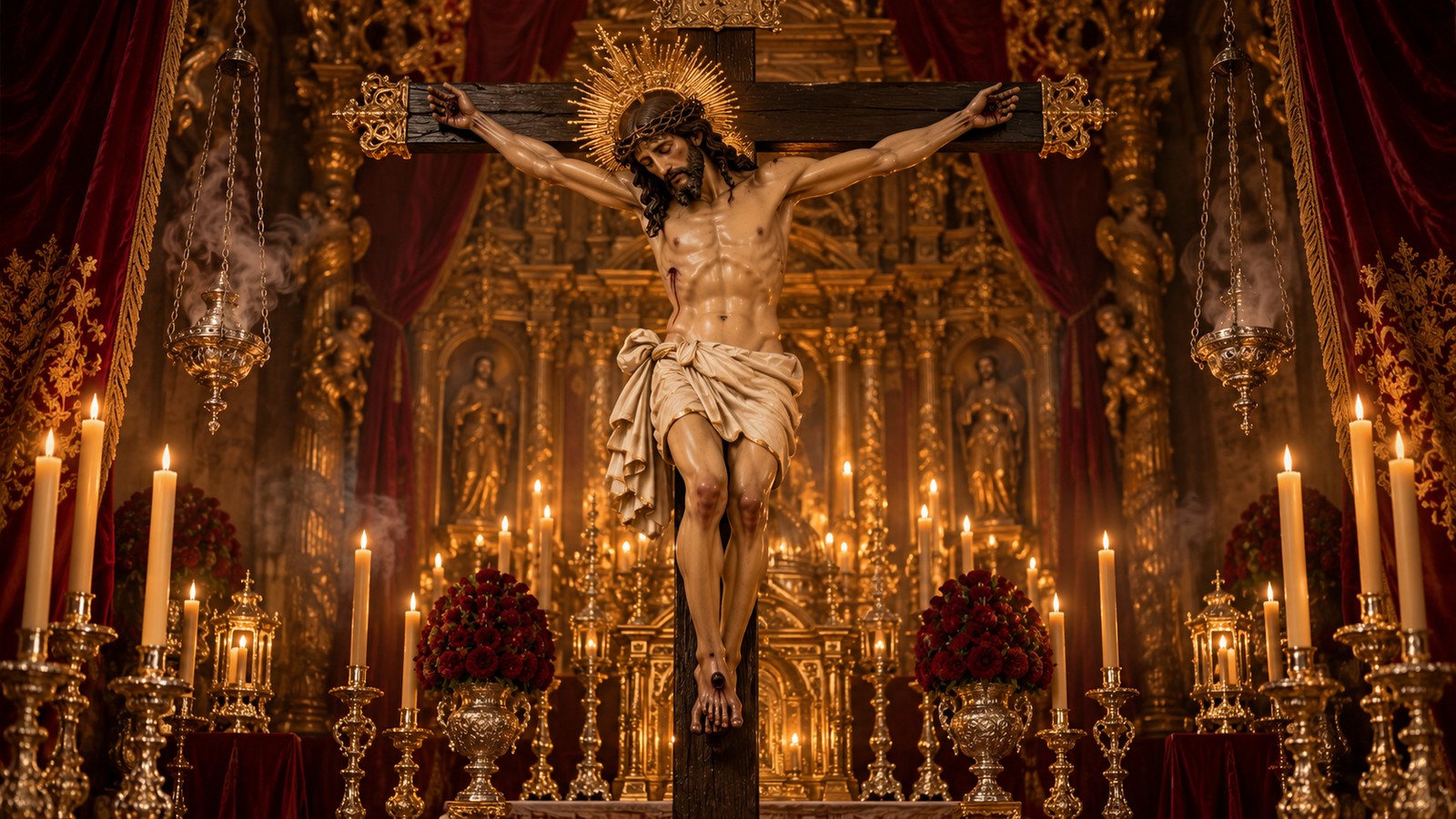
The Catholic Church’s commitment to social justice rests on the fundamental principle of human dignity and the conviction that every person is created in God’s image and likeness. Throughout its history, the Church has been a firm voice defending the rights of the poor and marginalized, and its Social Doctrine has developed as a response to the challenges facing the most vulnerable communities. From the publication of the encyclical “Rerum Novarum” in 1891 to Pope Francis’s recent pronouncements, the Church has defended a vision of social justice seeking to transform economic and political structures so that they serve the common good and promote a more just society.
3.19.1 The Preferential Option for the Poor: A Fundamental Principle
The concept of the preferential option for the poor is one of the pillars of the Church’s Social Doctrine. This principle holds that, although the Church must care for everyone’s well-being, it has a special responsibility toward the poor, the excluded, and those whose voices go unheard. The preferential option does not mean excluding other groups, but calls for placing the needs of the most vulnerable at the center of political, economic, and social decisions.
This principle was clearly articulated in the Medellín Document (1968), issued by Latin American bishops after the Medellín Episcopal Conference, a decisive moment in the development of Liberation Theology. The Latin American bishops recognized that conditions of poverty, injustice, and exploitation in the region were structures of sin requiring a pastoral response addressing not only poverty’s consequences, but also its systemic causes.
Pope John Paul II, in his encyclical “Sollicitudo Rei Socialis” (1987), reaffirmed the preferential option for the poor and emphasized that combating poverty is not limited to charity, but must include a structural transformation promoting social justice and eliminating the causes of inequality. For John Paul II, justice is not simply giving everyone their due, but creating conditions in which all can develop their potential and live full, dignified lives.
3.19.2 The Church and Structures of Sin: Analyzing the Causes of Poverty

Liberation Theology, developed by theologians such as Gustavo Gutiérrez and Leonardo Boff in Latin America, introduced the concept of structures of sin to refer to economic, political, and social systems perpetuating poverty and marginalization. From this perspective, poverty is not simply the result of poor individual decisions, but of an unjust system benefiting a few at the expense of many.
This approach was initially received with reservations by the Vatican, especially because of its use of Marxist categories to analyze social reality. However, Pope Francis has recovered some of this language when speaking of “structures of sin” and the “globalization of indifference”, terms he uses to denounce economic policies excluding the poor and leaving them on the margins of development.
The Church teaches that true social justice cannot be achieved through superficial economic reforms alone, but requires a moral conversion leading individuals and societies to see the poor as brothers and sisters. This entails changing economic and political priorities so that the common good and respect for human dignity stand at the center of every decision.
3.19.3 The Church’s Social Doctrine and Global Inequality
One of the greatest challenges of the twenty-first century is growing global inequality. According to reports from the World Bank and other international organizations, disparities between rich and poor have increased dramatically in recent decades. While a few accumulate a disproportionate share of the world’s wealth, more than 700 million people live on less than $1.90 a day.
Pope Francis has been an outspoken critic of this phenomenon. In his encyclical “Fratelli Tutti” (2020), he speaks of the need for an “economy with a human face”, based not on individualism and greed, but on solidarity and fraternity. Francis condemns neoliberalism, which, he says, has generated a model of “growth without development”, where benefits are not distributed equitably and a person’s value is measured by their capacity to consume.

The Church advocates an economic approach promoting wealth redistribution, universal access to education and healthcare, and respect for labor rights. The Church’s Social Doctrine holds that work is a fundamental right and that every person must receive a just wage allowing them to support their family and live with dignity. In his encyclical “Laborem Exercens” (1981), John Paul II insisted that work is not merely a means of earning a wage, but a fundamental dimension of human existence.
3.19.4 The Church and the Fight Against Poverty: Caritas and Social Initiatives
In practical terms, the Church has developed a vast network of social organizations dedicated to combating poverty and exclusion. Caritas International, present in more than 200 countries, coordinates emergency, development, and reconciliation programs in contexts of war and natural disaster. Caritas not only provides material aid, such as food and medicine, but also works to empower communities through educational and sustainable development projects.
Another example is the work of the Missionaries of Charity, founded by Saint Teresa of Calcutta, who care for the “poorest of the poor” in the world’s poorest areas. Their approach is not confined to material assistance; the sisters seek to restore each person’s dignity through love and selfless service.
The Church has also been one of the strongest voices in the fight against human trafficking, which affects millions worldwide, especially women and children. Pope Francis has denounced this modern form of slavery and supported initiatives to rescue and rehabilitate victims, promoting the dismantling of criminal networks and the protection of vulnerable people’s rights.
3.19.5 The Church and Social Justice in the Future: Challenges and Opportunities

As globalization continues to transform the world, the Church faces new challenges in its mission to promote social justice. Automation and artificial intelligence threaten to eliminate millions of jobs, creating a new kind of structural unemployment. Meanwhile, climate change and environmental degradation disproportionately affect the poor, who bear the least responsibility for the ecological crisis but are most vulnerable to its effects.
Pope Francis, with his focus on integral ecology and the economy of care, has tried to offer an alternative vision integrating social justice and sustainability. His message is clear: the fight against poverty and the fight for the environment cannot be separated. The Church’s future in this field will depend on its ability to mobilize its members and allies around an approach to integral development that promotes not only economic growth, but human well-being in harmony with the planet.