Your decision
A barrier of access leaves someone out of activities. How can you help change space?
Open an option to discover what may follow. You can change your mind.
Listen first
Listening opens up space to know a real need.
Ask what you need
A respectful question takes care of the autonomy of the other person.
Deciding without listening
You can reconsider: helping doesn't mean replacing someone else's voice.
Open the secret door
Beyond the doorway
Compassion is also built with a ramp, schedule or listening.
Reading note
Jesus lived and taught within the Jewish world. These controversies do not describe an entire people or justify prejudice against any religion. “Hacking” here means repairing through love, not digital intrusion.
The translations were generated locally by machine and await full linguistic review. The scenes are editorial adaptations; their dialogue is not a literal quotation from Jesus. The highlighted biblical passages in this translation are editorial paraphrases, not quotations from an official Bible translation.
Read in context: Mark 1:40–45
The manuscript text
The manuscript text is retained with organization names coded. Its historical interpretations and classifications belong to the essay and are not validated historical measurements.
Touching people with leprosy
Historical context: Leprosy, in Jewish society of the first century, was one of the most feared and stigmatized diseases. The lepers were seen not only as physically unclean, but also as spiritually impure. According to the Law of Moses, they were considered "impure" and had to live isolated from the community. Any physical contact with them made the person "ritually impure" and required a series of rituals to be purified again. The lepers were to shout, "Wonderful, unclean!" as they approached people to alert them and thus avoid any contact. Being touched by a leper involved not only physical danger, but also spiritual pollution. Touching them was breaking the most basic norm of ritual and social purity.
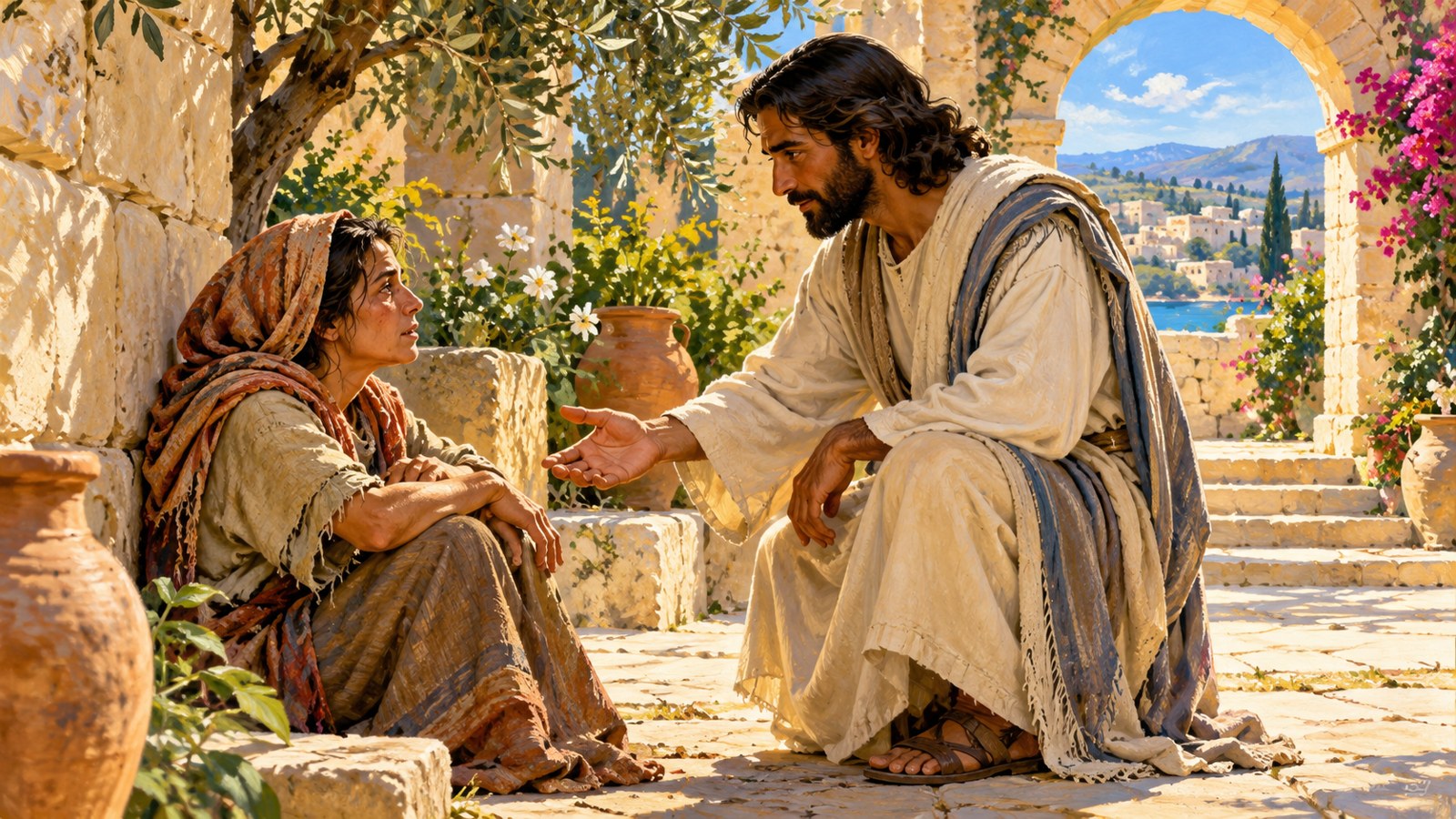
Editorial paraphrase of the passage: Moved by compassion, Jesus reaches out to a person with leprosy. (Mark 1:40-41).
Degree of transgression at the time:Very high. Touching a leper was a grave violation of the laws of ritual and social purity. In doing so, Jesus risked not only becoming ritually unclean, but also openly challenging the rules governing the separation of lepers. For the mentality of the time, touching a leper was not just an act of compassion; it was heresy, as it seemed to reject the established system of holiness and ritual purity. In addition, religious leaders would have seen this act as a transgression that compromised the spiritual integrity of Jesus and thus his authority as a teacher.
Meaning in Jesus' time: When touching the leper, Jesus challenged the idea that sickness and suffering were signs of divine punishment. He showed that true purity was not to avoid the unclean, but to approach them with compassion. His touch not only healed the leper physically, but also restored his dignity and place in the community. In one act, Jesus broke down the barriers between "pure" and "impure," revealing that true love is not afraid to get its hands dirty to heal.
Contemporary Analysis:In the modern world, touching the leper can be compared with approaching people who are rejected or marginalized due to their state of health, social condition or personal circumstances. This includes those suffering from stigmatized diseases (such as HIV/AIDS), homeless people, drug addicts or any group considered “untouchable”. Jesus ’ action remains a challenge to systems that marginalize people rather than help them heal and reintegrate. Its touch symbolizes the rejection of all forms of exclusion and stigmatization.
Impact on the world today: Jesus' attitude toward lepers inspires many to approach those who are marginalized and excluded. Movements to support people with illnesses, disabilities or in situations of social exclusion have adopted this example to show that true compassion is not about seeing from afar, but about getting personally and tangiblely involved. In a world where fear and prejudice continue to lead to segregation, Jesus' touch calls us to break with fear and see human dignity in those that society has rejected.
Current degree of transgression:Stop. Despite advances in understanding diseases and social inclusion, barriers still exist that keep certain people isolated and marginalized. In many cultures, approaching and showing solidarity with people considered "contaminated" (literally or metaphorically) remains an act of courage. Jesus ’ example invites us to challenge fear, prejudice, and norms that justify exclusion.
Conclusion: When touching the leper, Jesus not only healed his illness; he challenged the logic of separation and exclusion. He taught us that true purity is not about keeping hands clean, but about using them to heal and restore others. Today, his act remains a call to approach the marginalized and excluded, not with fear or judgment, but with love and compassion. Jesus invites us to see humanity behind every label and to break with the barriers that prevent us from touching and being touched by the pain of our neighbor.